Guide
Old Parking Lot: Tear It Out or Build Over It?
A lot of metro redevelopment starts with a cracked parking lot. It is tempting to leave it and build over it. Here is why that usually does not work under a building, and what the options really are.
Restaurants, car washes and retail going in along I-35 and across the metro are often built where something else used to be, and that usually means an old parking lot. The question comes up on almost every one of these jobs: does all that asphalt really have to come out?
Under a new building, the answer is nearly always yes. Under new parking, it depends on what the engineer allows. Here is how the two approaches compare.
If you already know what you want built, the demolition page covers scope, process and what a job like it involves instead.
Straight talk: we do not pave
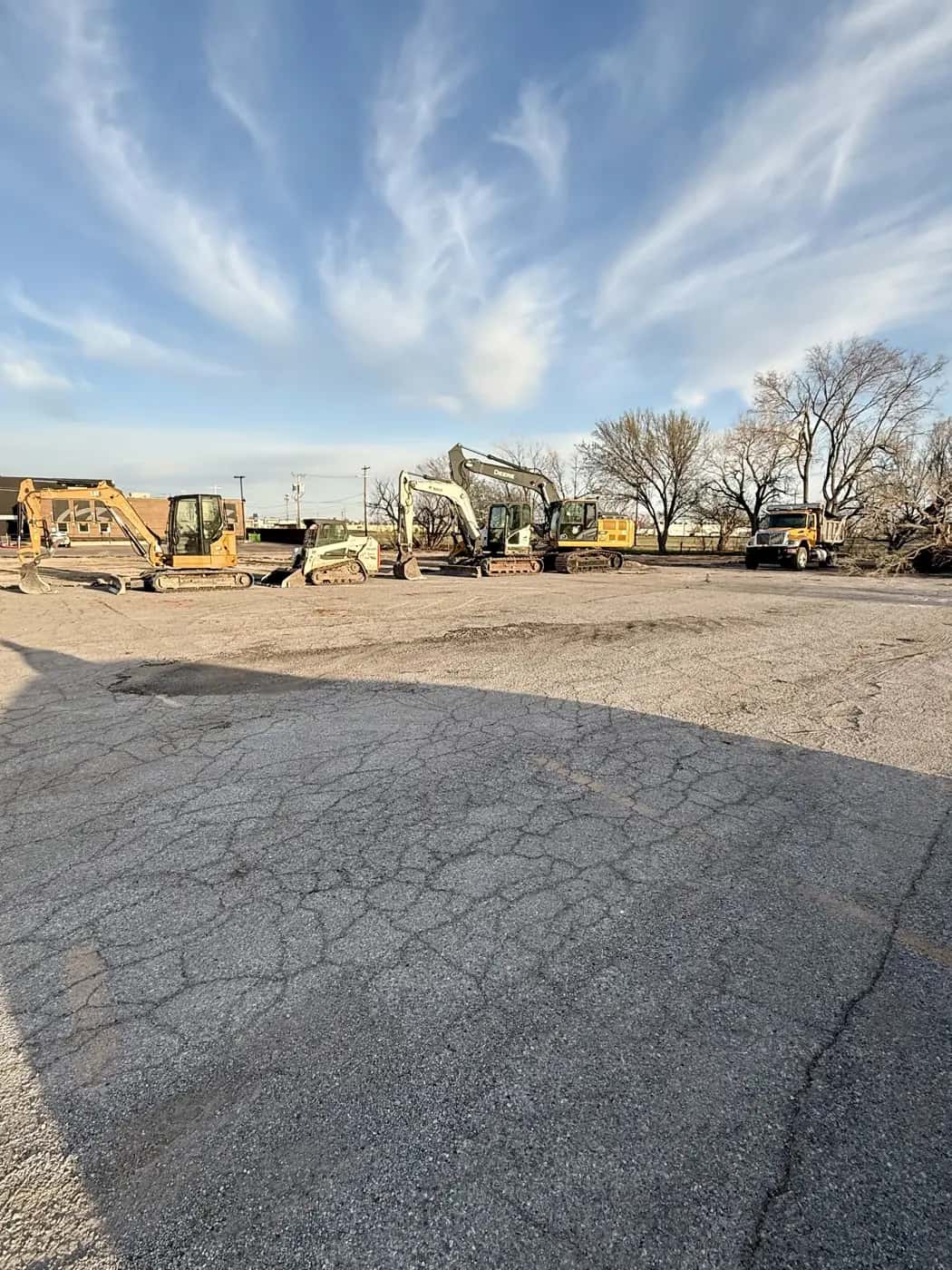
We tear out the old lot and build the subgrade for the new one. The new asphalt or concrete is laid by a paving contractor. We coordinate with them so the subgrade is ready when they are, but we do not put the paving on our own bid as if we were laying it.
Head to Head
Full tear-out
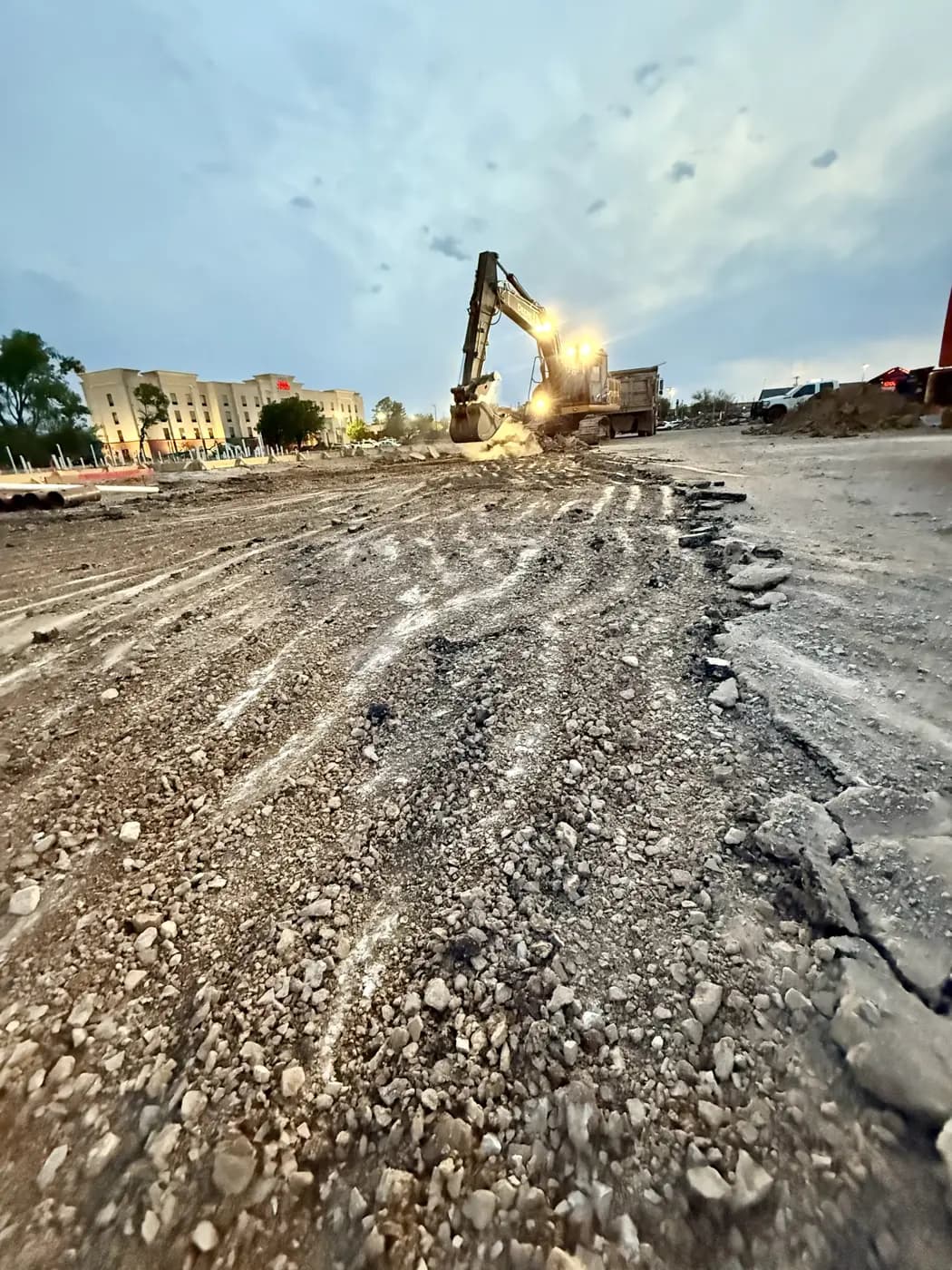
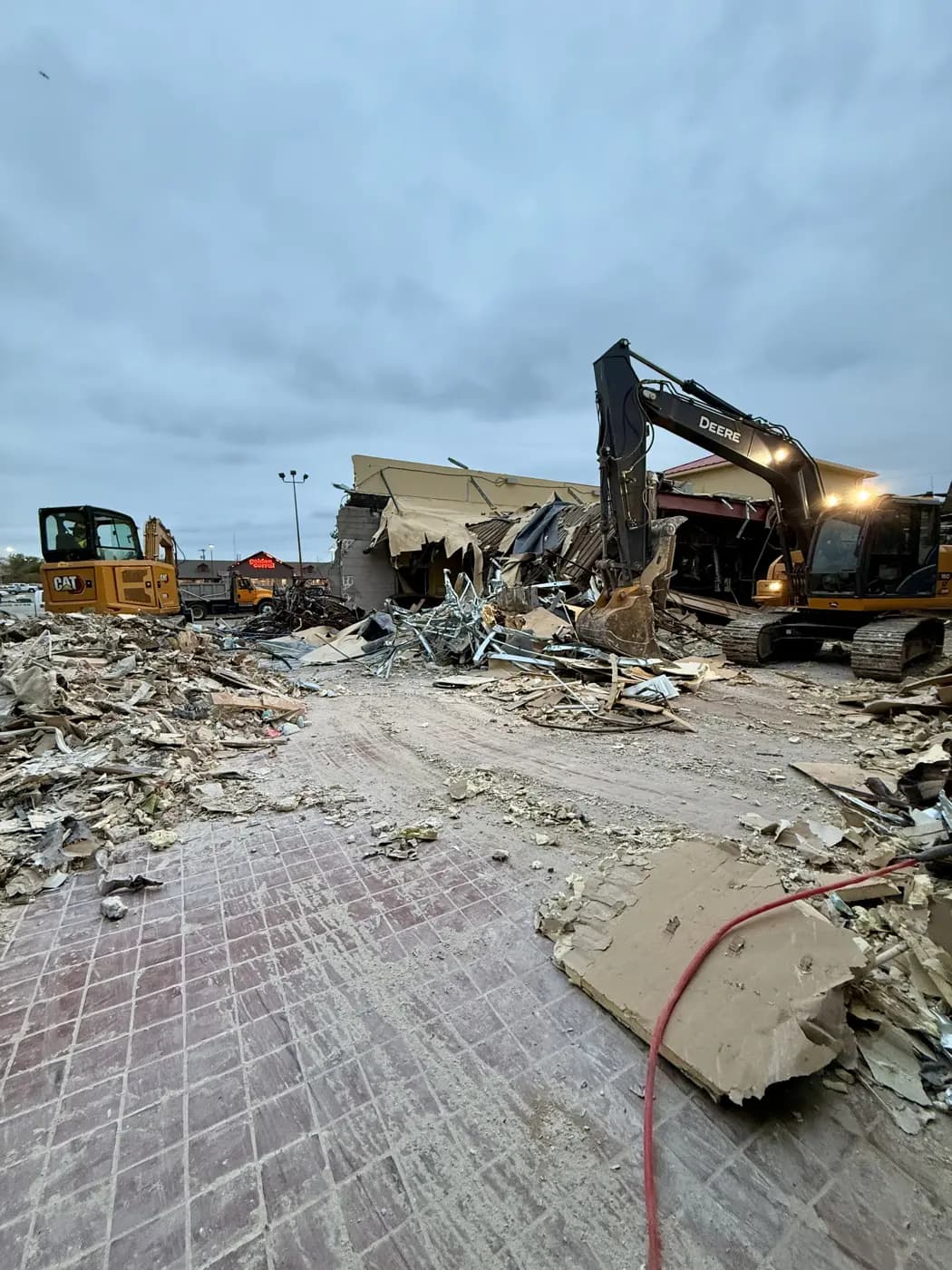
Asphalt and the old base come out, the site is stripped to native ground, and the new subgrade is built from scratch.
Reuse or build over
Old pavement is left in place, or broken up and reused as fill or base, where the engineer and the spec allow it.
| What you're comparing | Full tear-out | Reuse or build over |
|---|---|---|
| Under a building | The standard approach. The pad starts on known, tested ground. | Rarely allowed. Old pavement and base under a slab are an unknown layer. |
| Settlement risk | Low, when the new subgrade is built in lifts and tested. | Higher. Voids, old base and trapped water under the asphalt are hard to see until they move. |
| Haul-off | All of the pavement and base leaves the site. | Less leaves the site, if the material can be reused. |
| Grades | Free to rebuild the site to new elevations and drainage. | Tied to the old elevations, which may not fit the new drainage plan. |
| Who decides | The civil and geotechnical engineers. | Same. Leaving pavement in place is a design decision, not a field one. |
Where Each One Is the Right Call
Full tear-out: best for
- Anywhere a new building pad will sit
- Sites where the grades are changing
- Lots where the old base is failed, wet or contaminated with clay
- Anywhere the geotechnical report calls for it
Reuse or build over: best for
- Some parking and drive areas where the grades are not changing much
- Projects where the engineer has specifically designed for reused material
- Areas outside the building footprint
- Cutting down on haul-off where it is allowed
Why old pavement is a problem under new work
An old lot is not just asphalt. Under it is a base course of unknown thickness and condition, and under that, ground that may have been pumping water for years. Cracks let water in, and water in clay is how a lot heaves and settles in the first place.
Building a new pad over that buries every one of those unknowns under your slab. Taking it out lets the new site start on ground everyone can see and test.
Tear-out and site work from one crew
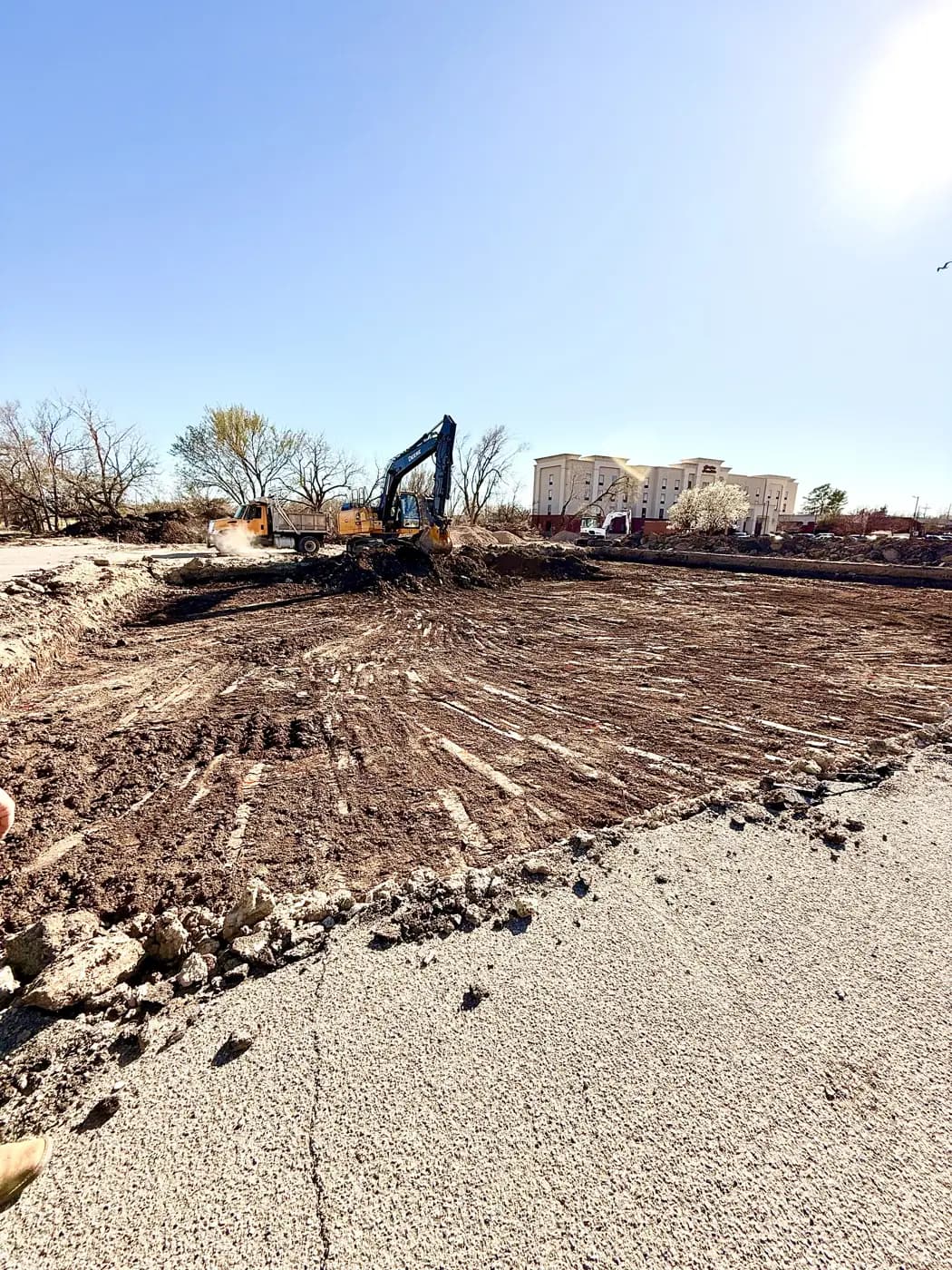
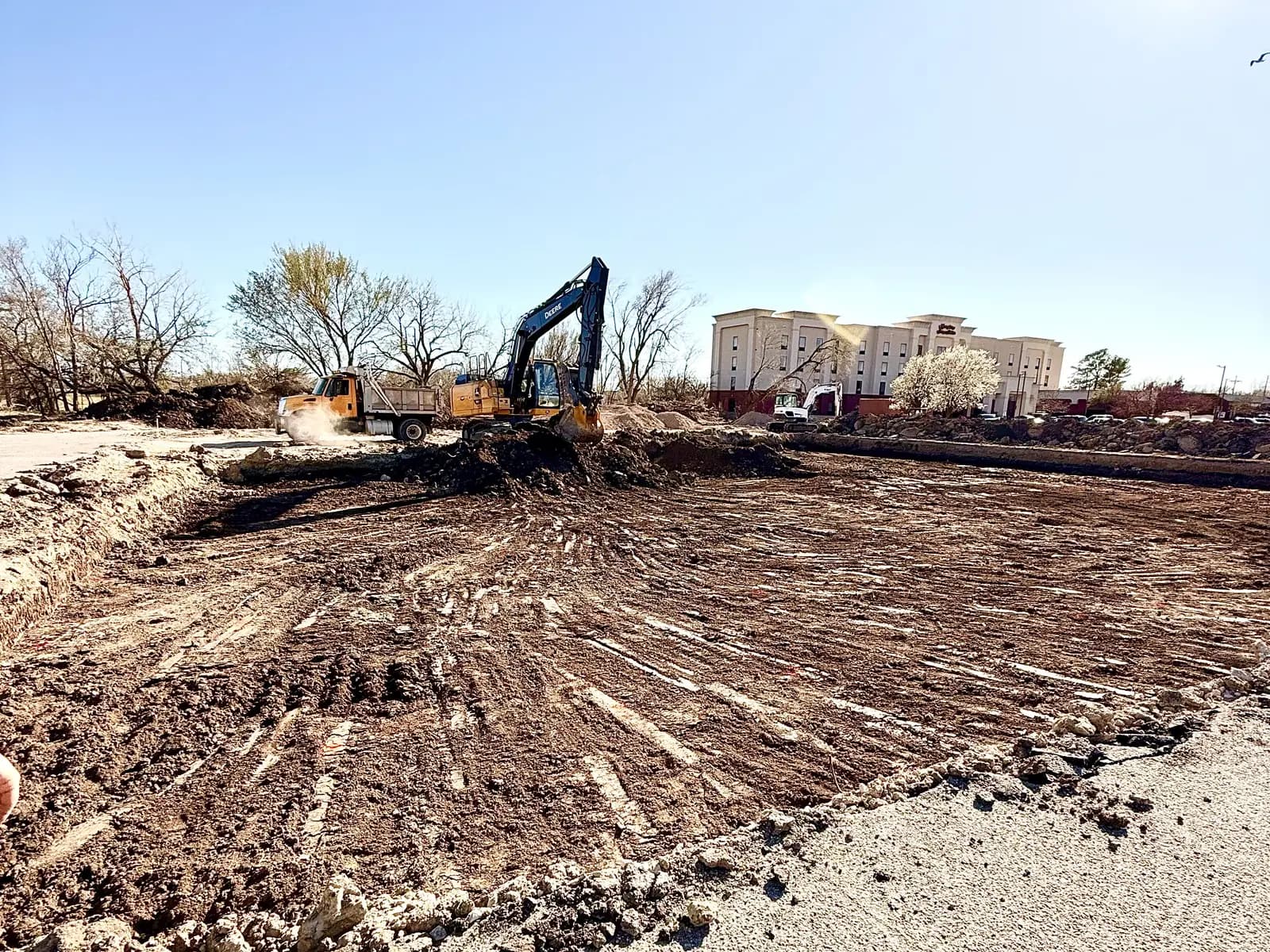
Because we do the demolition and the earthwork, storm sewer and subgrade, tear-out is just the first week of the job. The old lot comes out, the site is stripped, and the same crew starts cutting the new site the next morning, with no gap waiting on another sub.
What Your Ground Changes
The metro is not one kind of site. What is obviously the right call on a built-out redevelopment lot is the wrong one on a wooded tract, and the ground and the site underneath decide it.
Moore, OK
Cleveland County
Much of Moore's commercial work along I-35 is redevelopment, so old lots, slabs and footings coming out are a normal part of the scope here.
Site work in MooreMidwest City, OK
Oklahoma County
Older commercial sites in Midwest City often have decades of pavement and fill layered on top of each other. What is under there decides how deep the tear-out goes.
Site work in Midwest CityDel City, OK
Oklahoma County
Del City is built out, so tear-out happens on tight lots with neighbors close by. Staging and truck access are part of planning the demolition.
Site work in Del CityOklahoma City, OK
Oklahoma County
Infill redevelopment across OKC regularly means removing old lots next to streets and businesses that stay open, so phasing and haul routes matter.
Site work in Oklahoma CityWhat This Looks Like on the Ground
Frequently Asked Questions
Can you build a new building over an old parking lot?
Almost never directly on top of it. Old pavement and base under a slab are an unknown layer that can trap water and settle. The geotechnical report will normally call for removing it under the building footprint.
Can the old asphalt be reused?
Sometimes, where the engineer and the spec allow it, typically outside the building area. That decision belongs to the engineer.
Do you haul off the old asphalt and concrete?
Yes. Loading and haul-off are part of our demolition scope.
How soon can site work start after the tear-out?
Right away when we are doing both. The same crew moves from demolition to stripping and earthwork without waiting on another contractor.
The Work Behind This Guide
Everything above is one of these services, or the drainage work that keeps it from failing.
Demolition
Buildings, slabs and old parking lots out, hauled off, and the site handed back ready to build.
Learn more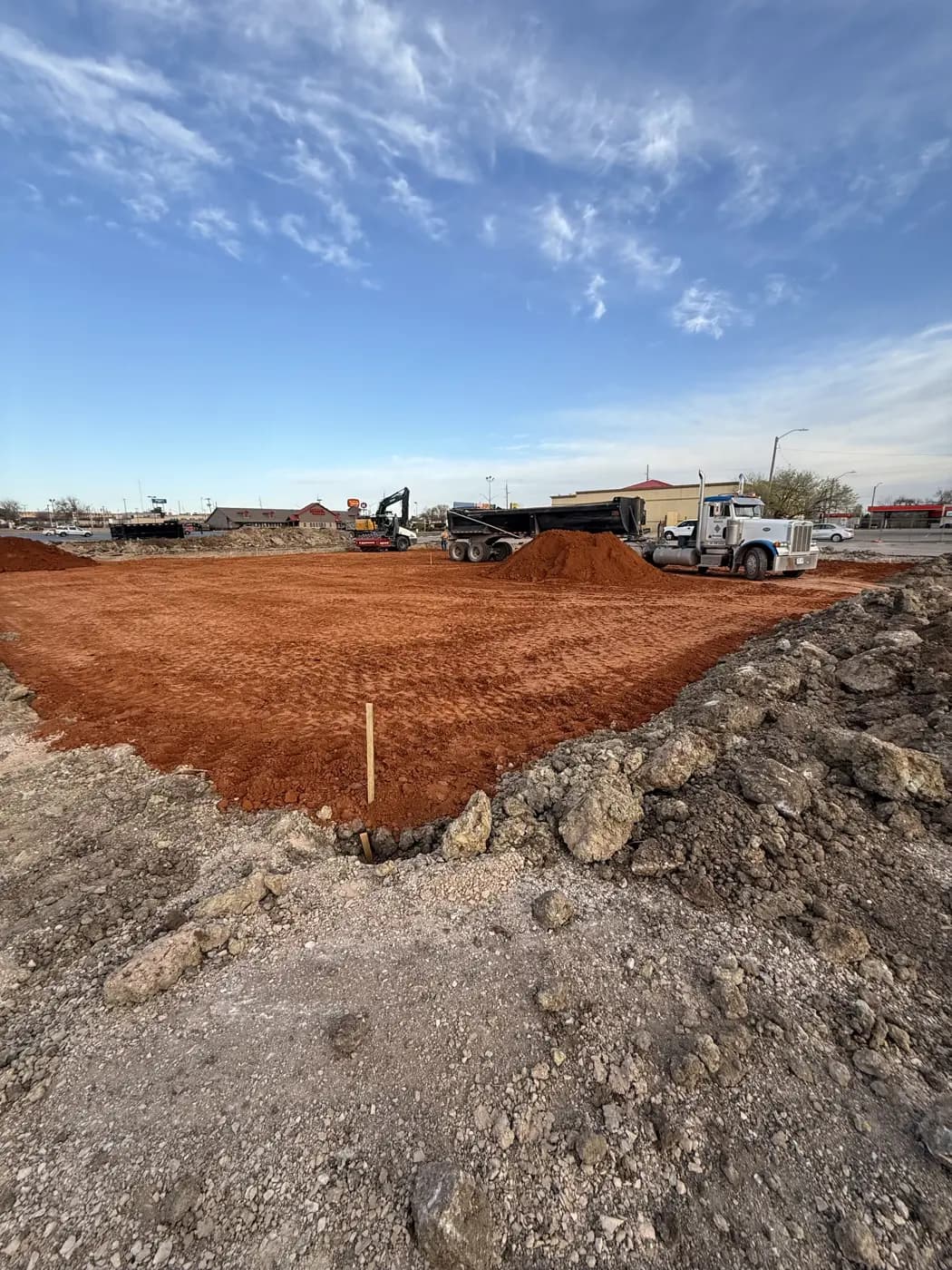
Subgrade Preparation
Pads and paving subgrade built in lifts, at grade and at density, ready for the testing lab.
Learn more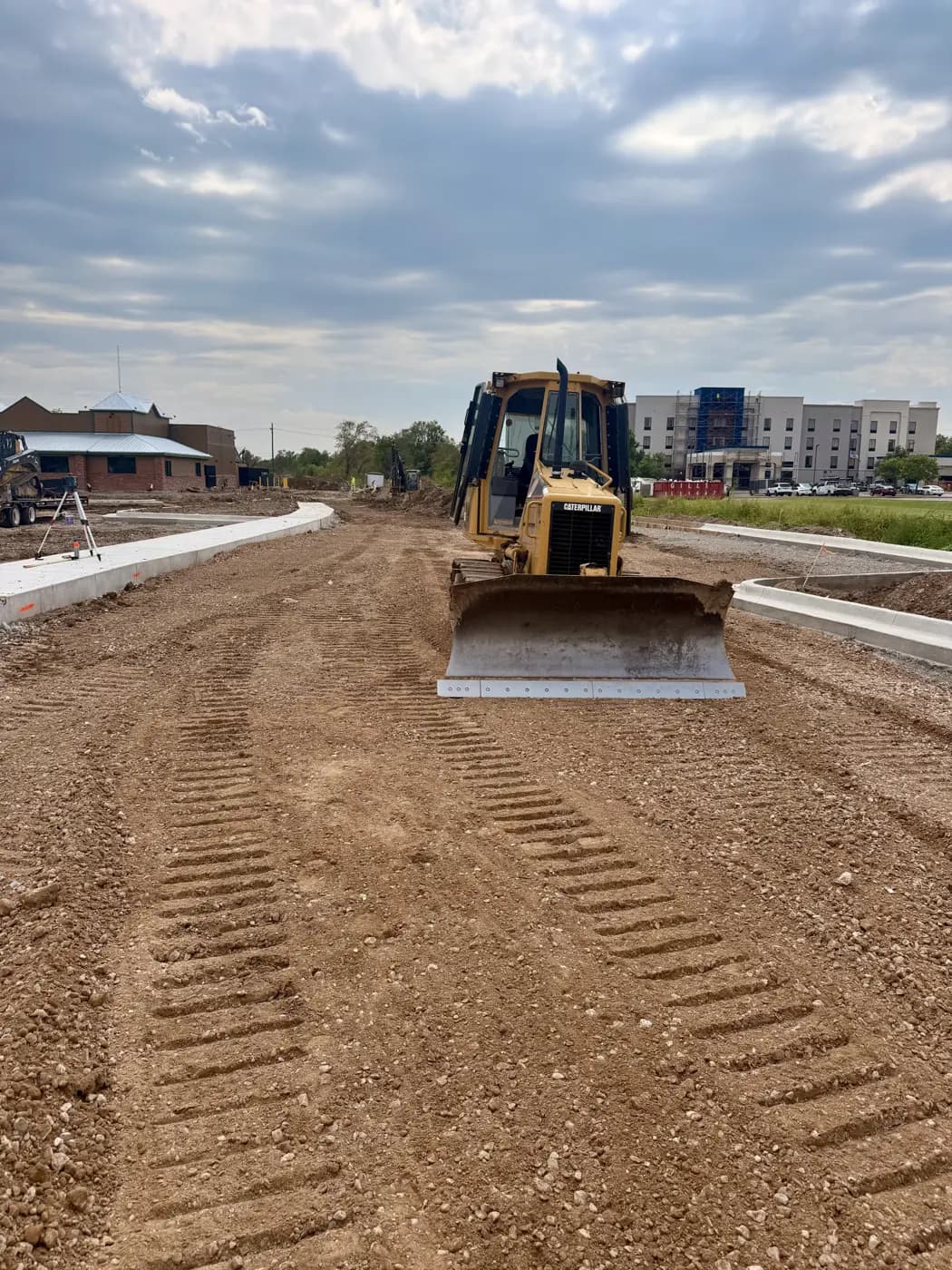
Earthwork
Cut, fill and rough grade to the civil plan, so every trade after us starts on time.
Learn moreStill not sure which one your ground wants?
Tell us where the gate is and what you are trying to end up with. We will walk it and tell you what we would build, including when the answer is less work than you were expecting.
Contact Us Directly
Prefer to call or email instead of filling out the form? Reach us directly:
Phone
(405) 265-8749Hours
- Monday – Friday8:00 AM – 5:00 PM
- Saturday9:00 AM – 5:00 PM
- Sunday12:00 PM – 4:00 PM
Service Area
Oklahoma & surrounding states. We travel 3–5 hours for commercial sites.