Guide
Undercut and Replace vs Stabilized Subgrade on Oklahoma Clay
Central Oklahoma clay swells when it is wet and shrinks when it dries. The geotechnical report usually answers it one of two ways under a building pad or parking lot. Here is what each one means on the ground.
If you are building in the OKC metro, there is a good chance your geotechnical report has a section about expansive clay. That is the soil that moves with moisture, and it is the reason slabs crack and parking lots heave a year after opening day.
Reports usually deal with it one of two ways. Either the problem soil gets dug out to a set depth and replaced with select fill that does not move, or the soil stays and gets treated in place, most often with lime or another stabilizer, so it stops behaving like expansive clay. Sometimes a report calls for both in different areas. Here is what each approach actually involves.
If you already know what you want built, the subgrade preparation page covers scope, process and what a job like it involves instead.
Straight talk: the lab tests our work, not us
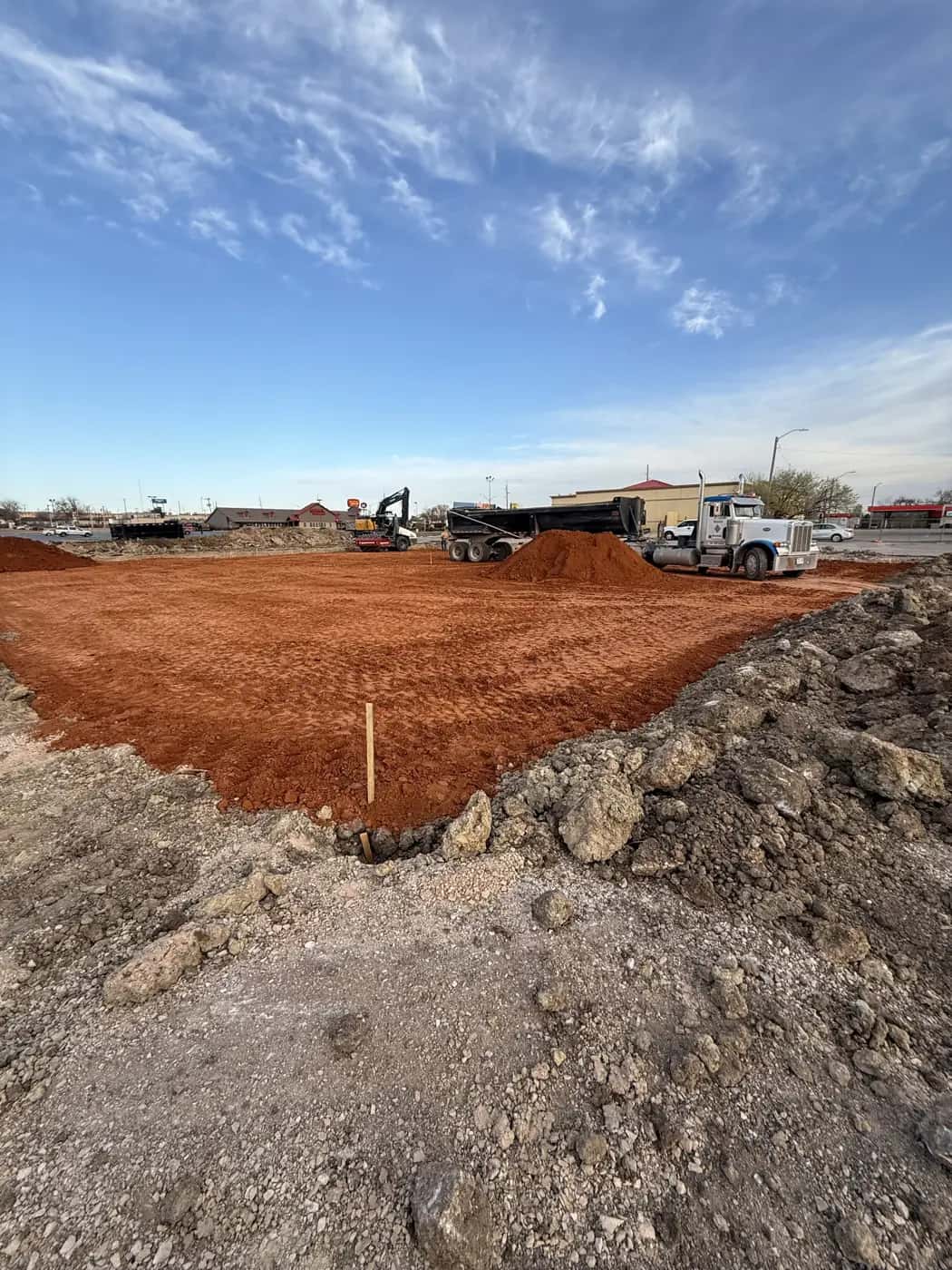
We build subgrade to the spec and have it ready for testing on the date we said. The density and moisture testing belongs to an independent testing lab, and it should. A contractor grading its own homework is not a test.
Where a report calls for lime or another stabilizer, the mixing is often done by a specialty contractor with equipment built for it. We build the subgrade around that work and coordinate the schedule so nobody is waiting on anybody.
Head to Head
Undercut and replace
Remove the problem soil to the depth the report calls for and rebuild with select, low-movement fill placed and compacted in lifts.
Stabilize in place
Leave the native soil and mix in lime or another stabilizer, then compact it, so it loses most of its tendency to swell and shrink.
| What you're comparing | Undercut and replace | Stabilize in place |
|---|---|---|
| What happens to the clay | It leaves the site, or moves to an area of the site where movement does not matter. | It stays and is chemically changed so it behaves better. |
| Trucking | Export of the clay and import of select fill. Haul distance drives a lot of the cost. | Little soil moves on or off the site; the stabilizer is what gets delivered. |
| Equipment and crew | Excavators, trucks and compaction equipment: standard earthwork. | Spreading and mixing equipment that is often run by a specialty stabilization contractor, with the earthwork crew shaping and compacting. |
| Weather | Rain slows hauling and can soak stockpiled fill, but the method itself is forgiving. | Mixing and curing depend on moisture and conditions, and the timing has to be managed closely. |
| Testing | Density and moisture testing on each lift of fill. | Testing to confirm the treatment depth and the result, plus compaction testing. |
| Who decides | The geotechnical engineer, in the report. | Same. Neither method is a field substitution. |
Where Each One Is the Right Call
Undercut and replace: best for
- Building pads where the report calls for a select fill cap
- Areas with soft or unsuitable material that has to come out regardless
- Smaller footprints where hauling a limited quantity is practical
- Sites where a source of suitable fill is close by
Stabilize in place: best for
- Large parking areas where hauling that much soil would be impractical
- Paving subgrade the report specifically calls to be treated
- Wet ground that needs drying and strengthening to work at all
- Sites where keeping material on site matters to the schedule
Moisture decides more than passes
Whichever method the report calls for, clay subgrade lives or dies on moisture. Clay compacted too dry looks great on test day and swells later when it finally gets wet. Clay that is too wet will not reach density no matter how many passes the roller makes.
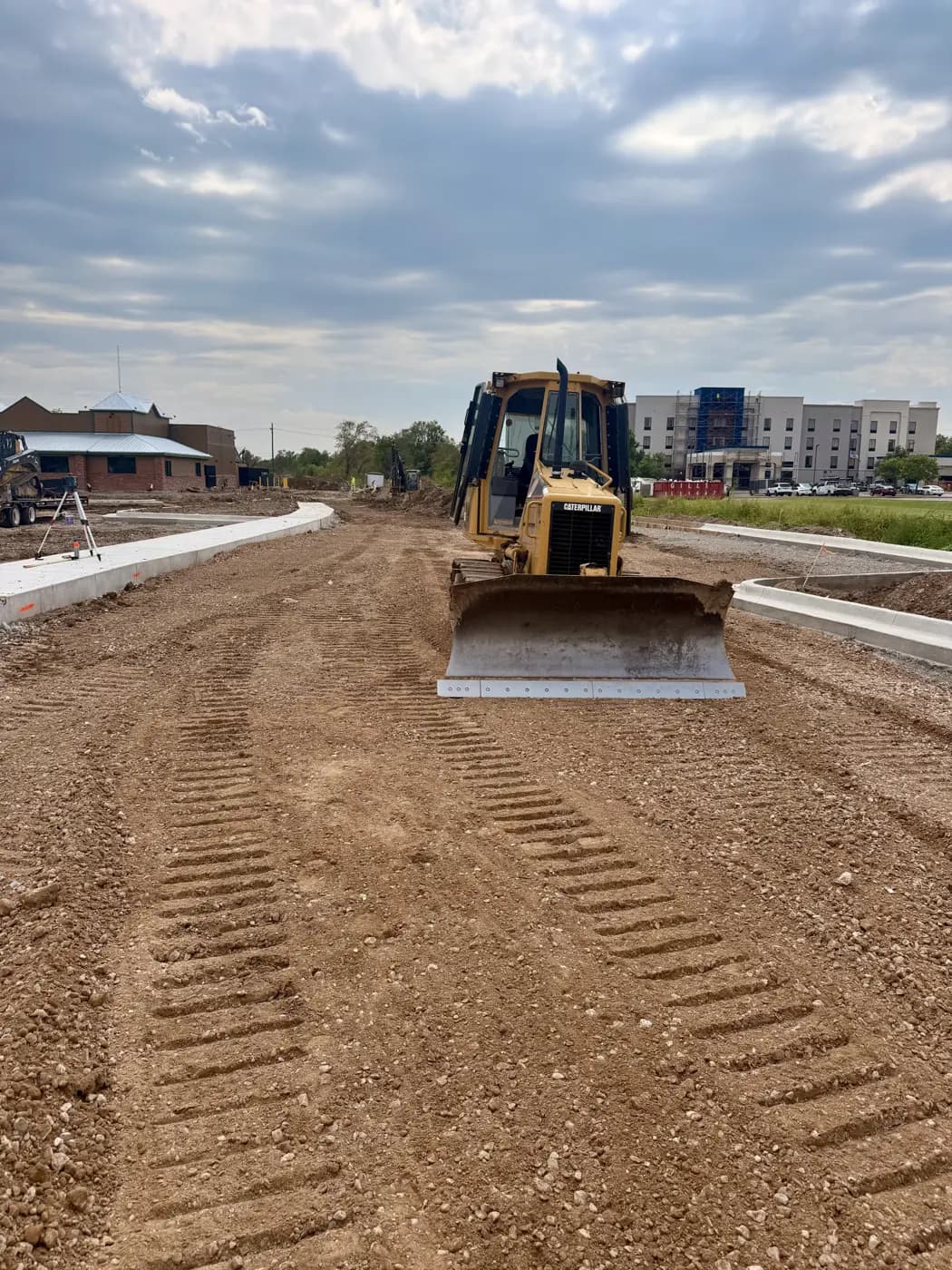
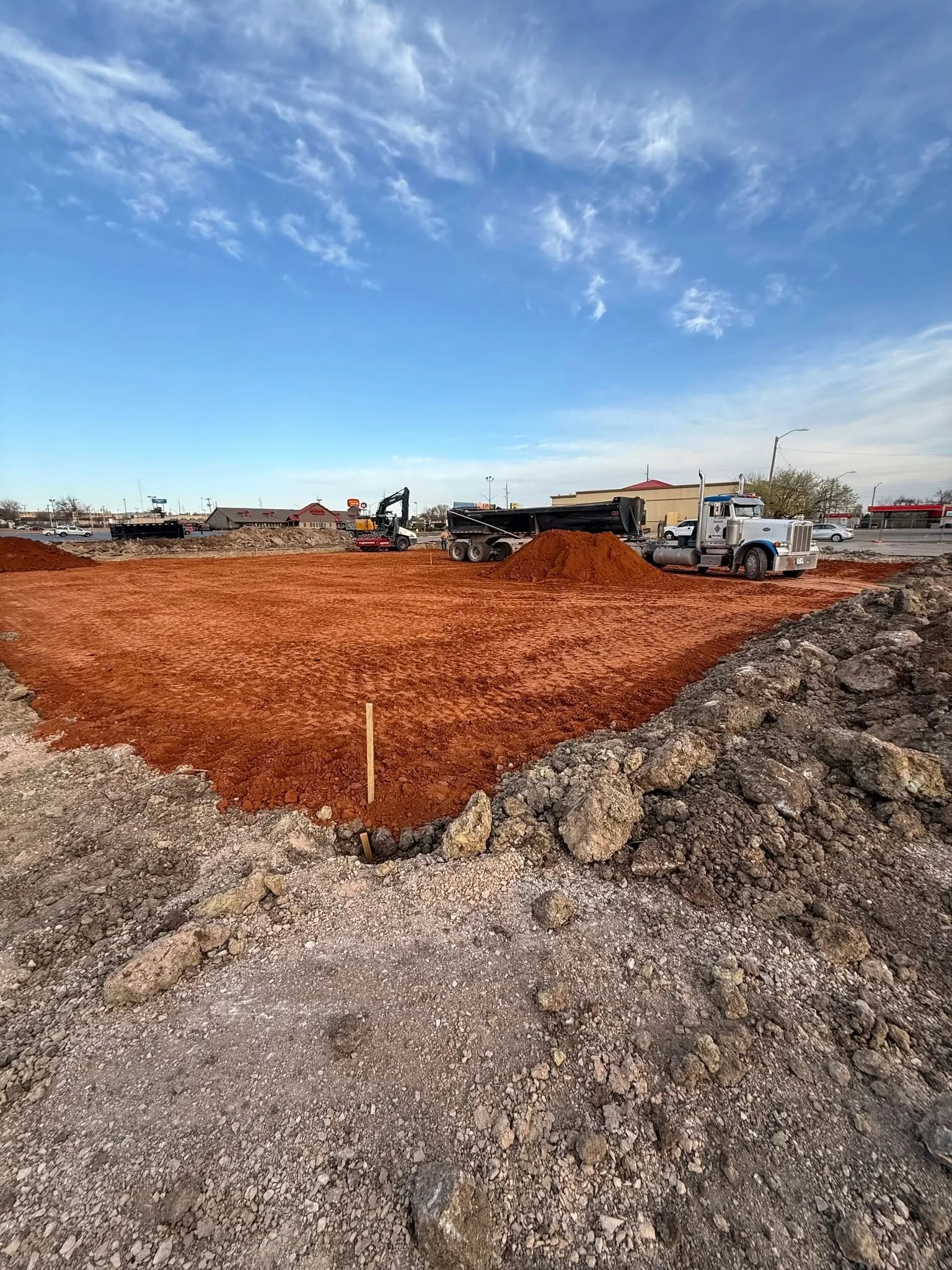
That is why our subgrade work starts with conditioning the material into the moisture range the spec calls for, then placing it in thin lifts and compacting each one before the next goes down. It is slower than dumping and rolling, and it is the reason the pad passes the lab and stays flat.
The report is the plan
We price what the geotechnical report actually asks for, whether that is a select fill cap under the building, an undercut depth, or treated subgrade under the paving. Two bids that do not match usually means one of them did not read the report the same way. Send it with the plans and the comparison gets a lot simpler.
What Your Ground Changes
The metro is not one kind of site. What is obviously the right call on a built-out redevelopment lot is the wrong one on a wooded tract, and the ground and the site underneath decide it.
Moore, OK
Cleveland County
Red clay that moves with moisture is common across Moore. On redevelopment lots, old fill and broken pavement from the previous build also turn up under the surface and have to come out before the new subgrade goes in.
Site work in MooreOklahoma City, OK
Oklahoma County
Much of OKC sits on clay and shale that move with moisture, and most commercial reports in the city address it directly. Large paved lots are where treatment in place tends to show up.
Site work in Oklahoma CityMidwest City, OK
Oklahoma County
Older sites here often have decades of fill and pavement over the native clay. What is under the old lot changes the undercut more than the clay itself does.
Site work in Midwest CityDel City, OK
Oklahoma County
Tight, built-out lots make hauling harder. When the report allows a choice, staging and truck access are part of the conversation.
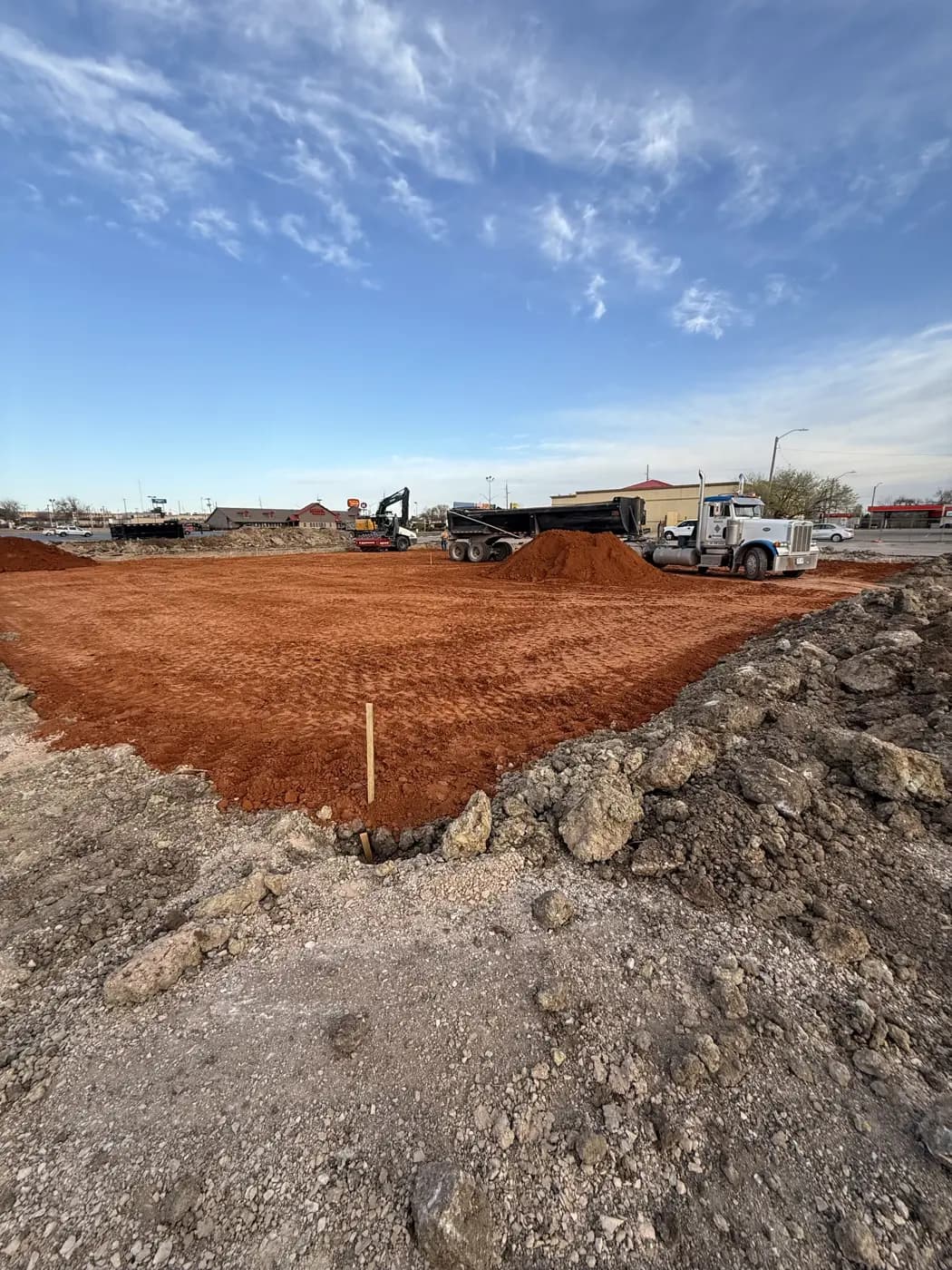
Site work in Del CityWhat This Looks Like on the Ground
Frequently Asked Questions
Why does my geotech report talk about expansive clay?
Because much of the OKC metro sits on clay that swells when wet and shrinks when dry. Left alone under a slab or pavement, that movement cracks concrete and heaves asphalt. The report tells the builder how to deal with it on your specific site.
Is undercut and replace better than lime stabilization?
Neither is better everywhere. Undercut and replace removes the problem soil and works well under building pads and smaller areas. Stabilizing in place treats the soil without hauling it and is common under large paved areas. The geotechnical engineer picks based on the site.
Do you do the density testing?
No. Testing is done by an independent lab. We build the subgrade to spec and have it ready for them.
Can rain delay subgrade work?
Yes. Clay that is too wet cannot be compacted to spec, so after heavy rain the ground has to dry back into range before work continues. We plan around it and tell you when it changes the schedule.
The Work Behind This Guide
Everything above is one of these services, or the drainage work that keeps it from failing.
Still not sure which one your ground wants?
Tell us where the gate is and what you are trying to end up with. We will walk it and tell you what we would build, including when the answer is less work than you were expecting.
Contact Us Directly
Prefer to call or email instead of filling out the form? Reach us directly:
Phone
(405) 265-8749Hours
- Monday – Friday8:00 AM – 5:00 PM
- Saturday9:00 AM – 5:00 PM
- Sunday12:00 PM – 4:00 PM
Service Area
Oklahoma & surrounding states. We travel 3–5 hours for commercial sites.